One material for label and cup
On a PP cup the label is made of PP too, so the pack does not have to be separated for recycling.
Printed labels
The printed label is already in the mould and becomes part of the pack during forming.
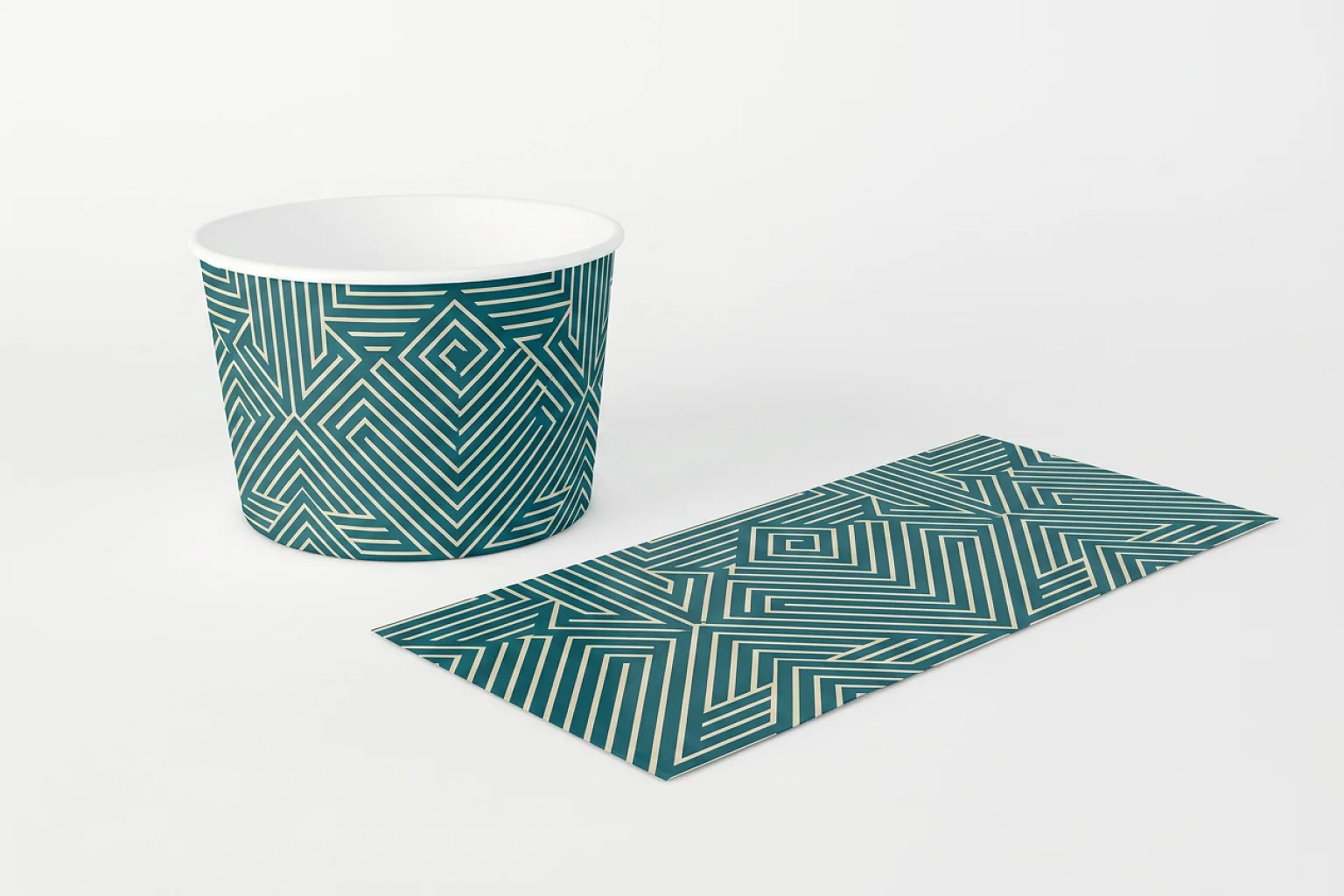
The key selection benefits at a glance.
On a PP cup the label is made of PP too, so the pack does not have to be separated for recycling.
The label is bonded to the container wall. Condensation, chilling and washing find no adhesive edge to attack.
A moulded-in label cannot be peeled off and replaced by another without damaging the container.
The pack leaves the moulding machine fully decorated, even with many varieties.
Product
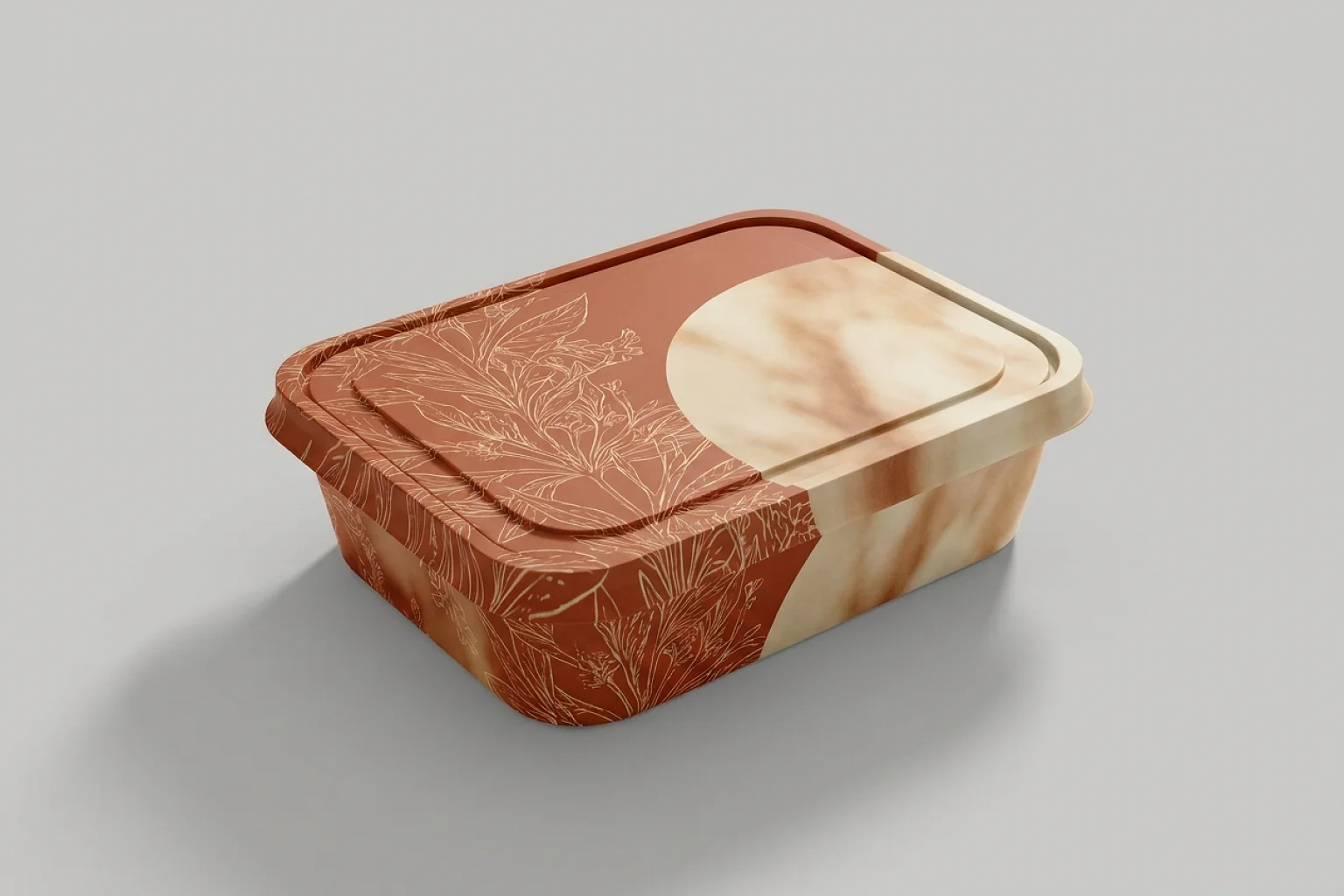
In-mould labels are not applied to a finished container. They sit in the mould before forming, the plastic is added, and once everything has cooled the decoration and the container are a single part. For the brand that creates a large continuous surface without a label edge. Hummel Print prints the artwork on the film, and the packaging manufacturer forms the pack.
Process
The label is a printed plastic film that matches the material of the pack. A handling system places it in the open mould. The plastic is then injected, blown or thermoformed, and film and moulded part bond under heat and pressure.
What you see on the finished container is therefore not an applied surface but the container wall itself. Front, back and curve can carry one continuous design, and the lid can be included in the same image.
Forming process
The packaging manufacturer chooses the process based on container shape, plastic and volume. The label's material and print build depend on it, which is why the manufacturer's details belong in the first conversation.
| Forming process | Typical containers | What it means for the label |
|---|---|---|
| Injection moulding | cups, trays, tubs, cans and lids | self-supporting film that bonds with the part during injection |
| Blow moulding | bottles and jerrycans | a heat-activated back layer is common |
| Thermoforming | thin-walled cups and trays | the film has to withstand heating and forming |
Applications
For dairy, ice cream and delicatessen, the label sits on the outside of the container wall. Food packaging must meet the requirements of Regulation (EC) No 1935/2004 as a whole. Which inks and which varnish are suitable is clarified at the start with you and the packaging manufacturer.
Collaboration
An in-mould project has three parties. The brand owner brings the design, varieties and requirements from filling and use. The packaging manufacturer defines plastic, tool and forming process and places the label in the mould. Hummel Print takes care of artwork checks, colour build, film to the approved specification, printing and die-cutting.
At the end there is a moulding trial at the packaging manufacturer, in which the printed label is run in the real tool. Only this trial shows whether position, bond and appearance are right on the finished container.
Alternatives
If the decoration is to be applied to the finished container, a no-label-look label with transparent film creates a similarly edgeless impression. For plastic cans and lids, can labels work on the finished container. For dairy and delicatessen, the mandatory information from the food label belongs in the planning, and where a container is wrapped rather than moulded, sleeves and wrap-around bands are the better format.
FAQ
In-mould labels are printed plastic films that are placed in the tool before forming. During injection moulding, blow moulding or thermoforming they bond with the plastic. The decoration is then part of the pack and is not applied afterwards.
A self-adhesive label is stuck onto a finished container and has a visible edge. An in-mould label is created in the same step as the container and lies within the container wall. This allows larger continuous design areas, and a separate labelling step is no longer needed.
Usually PP film, because most IML packs are also moulded from PP. The film comes smooth or textured, opaque white or transparent. Which film fits depends on the forming process and the container's plastic.
Photographic artwork, fine type and strong colour areas are possible, as are white and transparent versions and matt and gloss effects. Up to eight colours with spot colours and opaque white are possible. Each variety can have its own design.
Codes can be planned into the design. How well they scan after forming depends on the position, size, curvature and surface of the container. Code areas therefore belong in the design and the moulding trial early on.
Useful are the pack type, a drawing or sample of the container, the planned forming process, the name of the packaging manufacturer and details on the number of designs and the volume. If anything is missing, it can be clarified in conversation.
More products
Quality you can verify
Contact
Talk to us about the container, the planned forming process, the packaging manufacturer, the desired design and the volume. This sets the route to the first sample and the moulding trial.


We will get back to you within one business day.