More labels per roll
There is no backing liner and no gap between labels, which is around 2.4 mm per label on standard labels. More labels fit on a roll of the same diameter.
Labels without a backing liner
Linerless labels are wound onto the roll without a backing liner. We produce them blank or preprinted, matched to your printer and cutter.
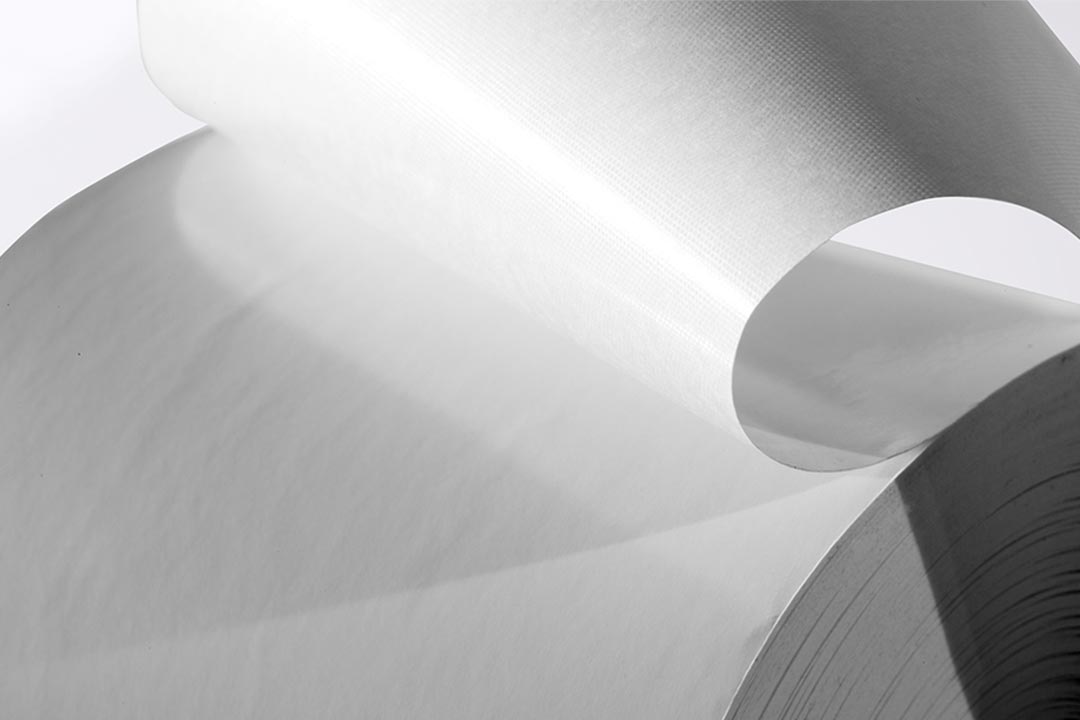
The key selection benefits at a glance.
There is no backing liner and no gap between labels, which is around 2.4 mm per label on standard labels. More labels fit on a roll of the same diameter.
With a suitable printer and cutter, every label is cut as long as its content requires.
The backing liner is eliminated. No liner web is left over after labelling that has to be collected.
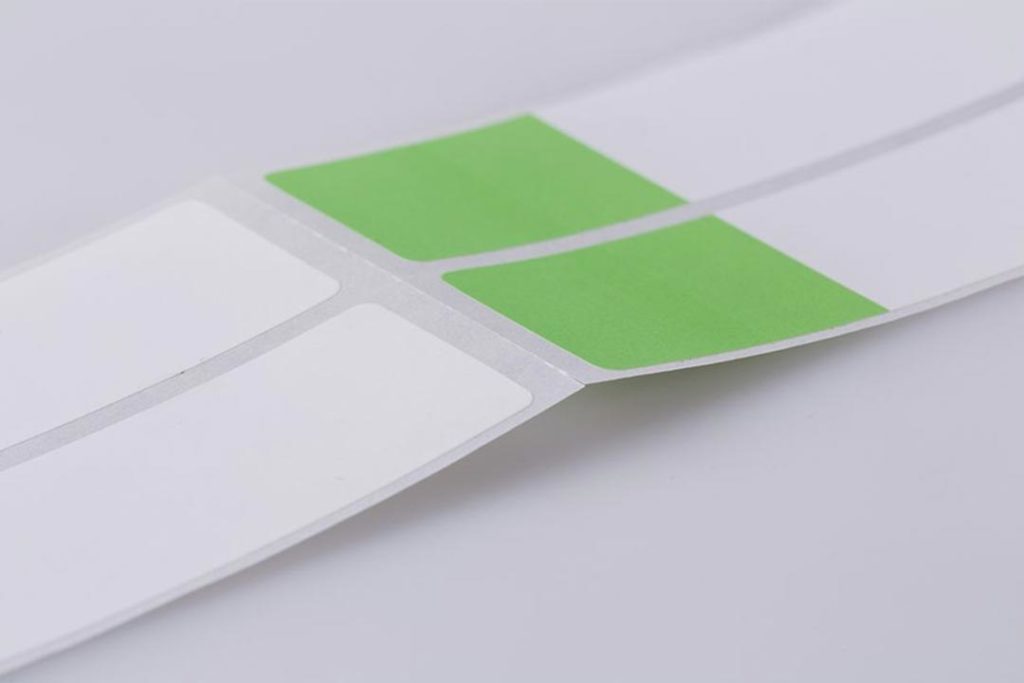
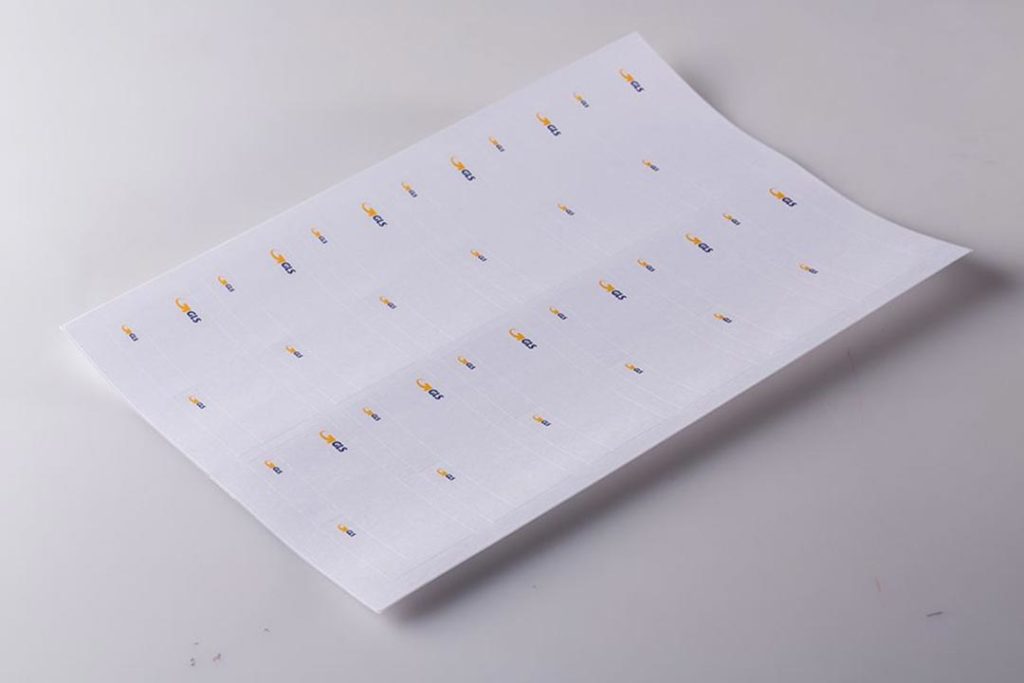
We preprint your logo, colour areas and fixed information. Your printer adds prices, weights or codes on site.
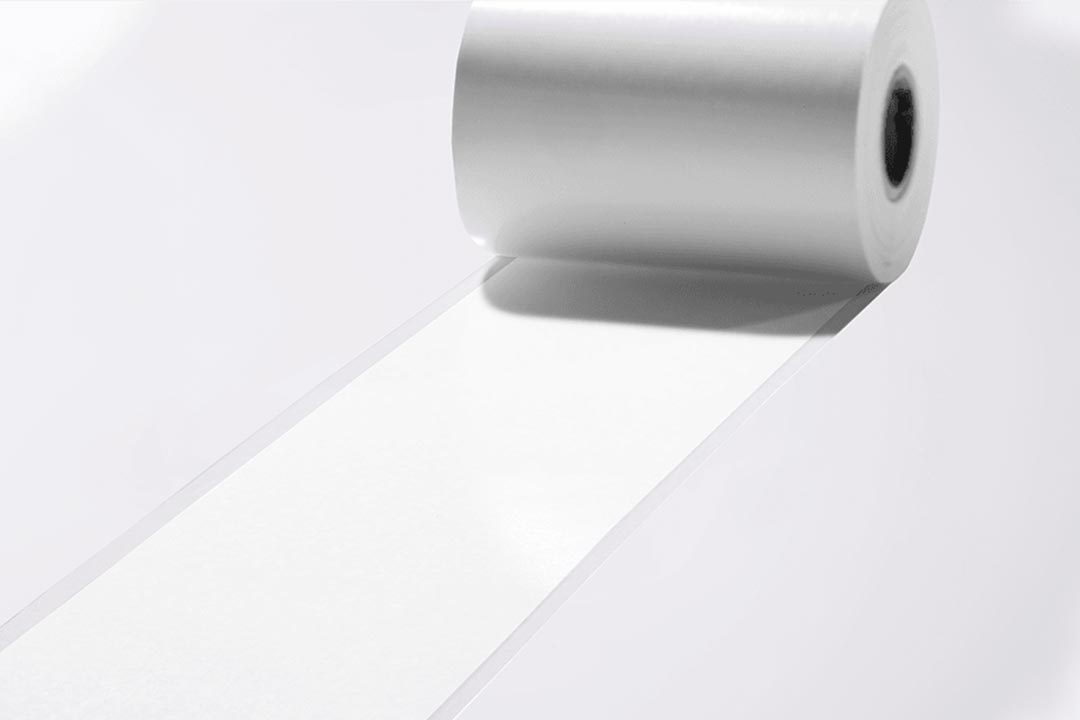
Specification
With linerless labels there is no backing liner between the individual labels. Adhesive and surface are matched so that the web can be unwound, printed and cut. Linerless labels are processed in direct thermal and thermal transfer printers built for the purpose, usually where large volumes are labelled.
Eliminating the backing liner is a property of the construction. How much this affects material use and waste in your process depends on the equipment, the roll and the basis for comparison. How many more labels fit on a roll depends on the roll diameter and the label length.
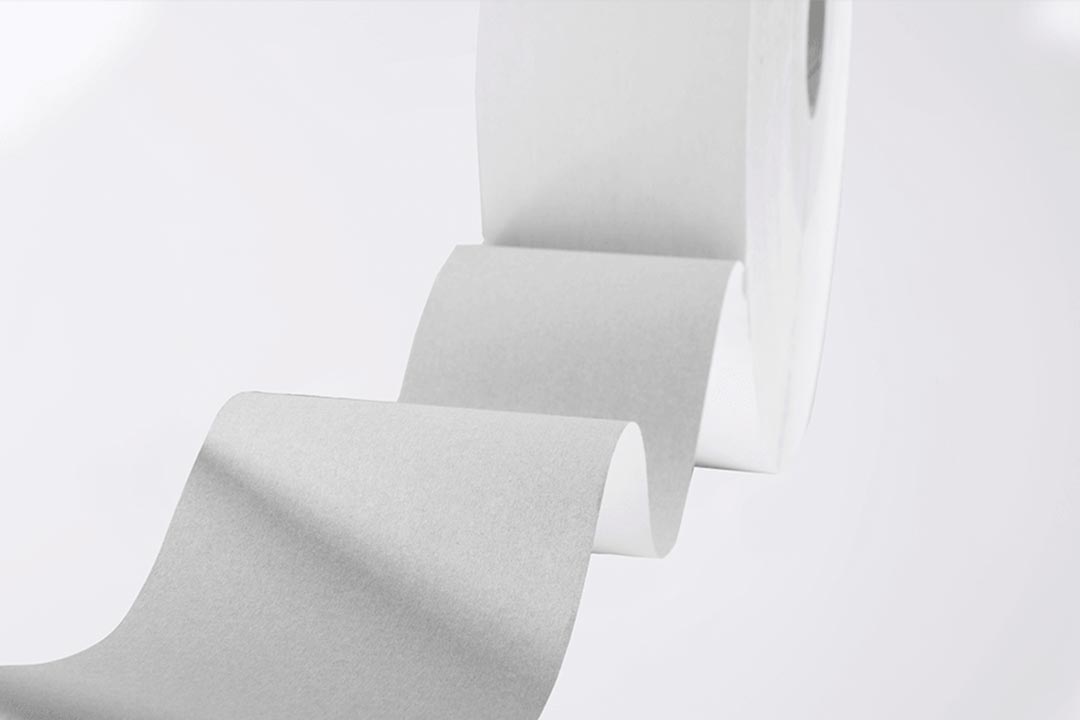
Applications
When the amount of information or the product changes, a system that cuts on demand produces labels of different lengths. Print layout, cut position and equipment need to work together.
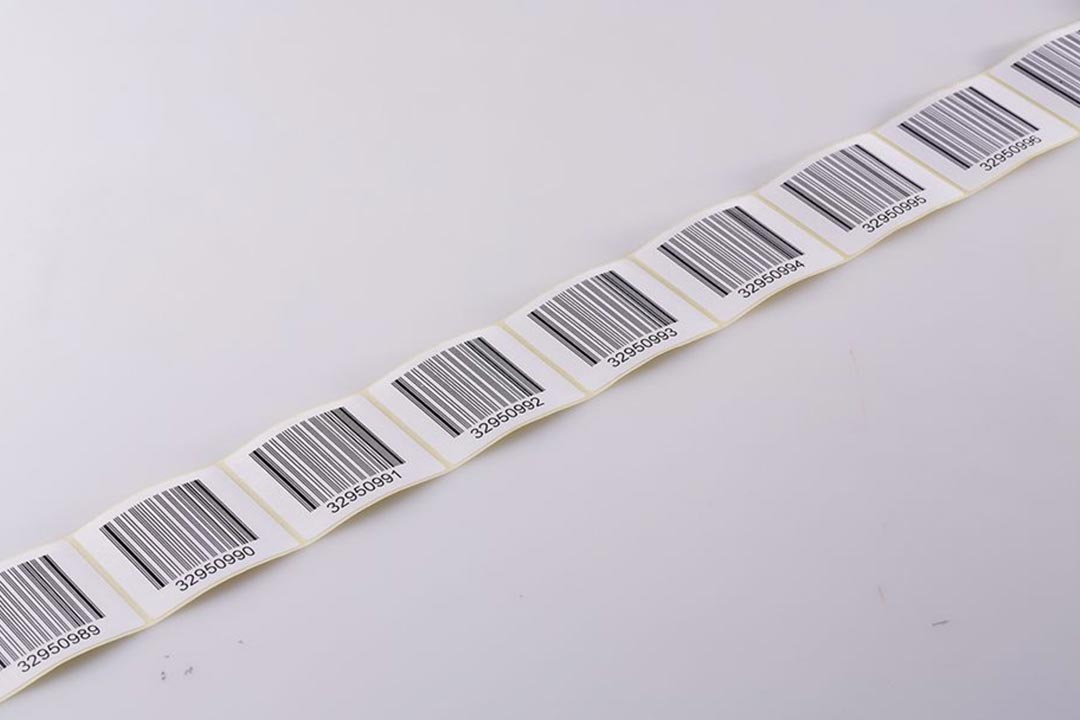
Changing data needs clearly legible text and code areas. For barcodes, contrast, module size and the intended scanner also matter.
A colour preprint carries the logo and recurring design. Product, price or logistics data is added at the point of use, in a field that fits the printer's print window and the cut edge.
System data
| System area | Relevant to selection | Relevance |
|---|---|---|
| Label material | paper or film, surface and coating | influences printing, cutting and application |
| Adhesive/release principle | adhesive zone, reverse-side treatment and winding | enables roll transport and later adhesion |
| Printing process in the device | direct thermal or thermal transfer | determines the material and ribbon requirement |
| Roll | width, length, core, outer diameter and winding | must fit the printer and holder |
| Sensors and cutter | marks, cutting principle and position | control the feed and label length |
| Application | substrate, temperature, radius and period of use | determines the label construction |
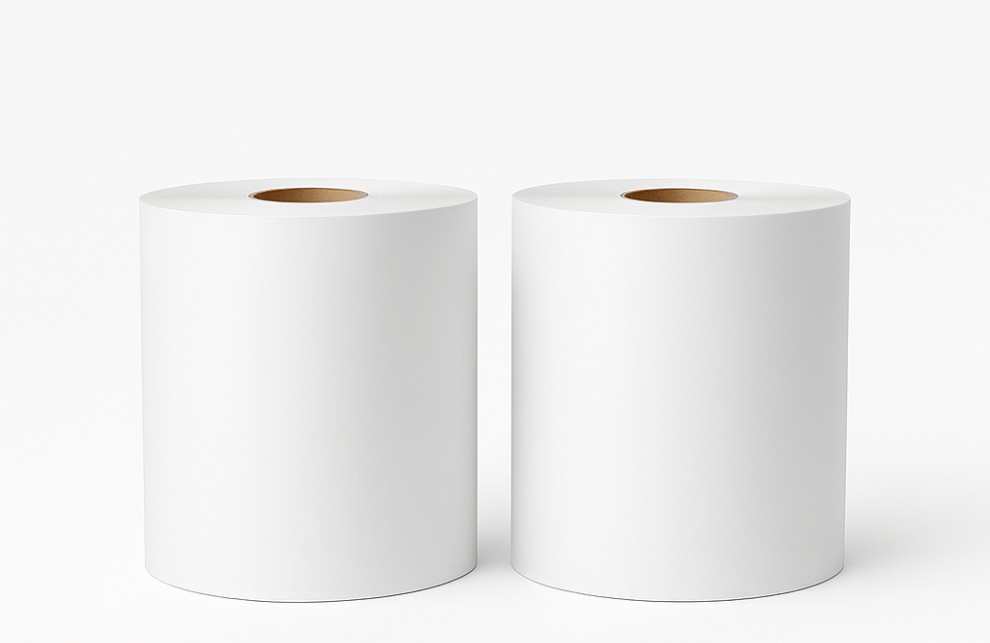
Preprint
A preprint with your logo, information or colour areas creates a consistent brand image while the equipment adds the variable data on site. We lay out the preprint so that it covers neither the later print window nor the areas needed by the sensor and cutter.
Direct thermal printing creates the image in a heat-sensitive layer; thermal transfer printing transfers colour from a ribbon. The page on thermal labels shows which process suits you. For number sequences and individual codes, the page on variable data labels provides additional guidance.
Compatibility
A linerless material needs to work with the web path, printhead, pressure, sensors and cutter of the intended equipment. Adhesive contact within the mechanism and cutting behaviour affect how stable the process runs. The equipment configuration and application therefore belong in the test, not just the model name.
Roll width, core, outer diameter and winding depend on the holder, the cutting technology and the required label length.
More products
Quality you can verify



Contact
Tell us about your printer and cutter, roll holder, label width, preprint and application. We will then work out which linerless version suits your process.


We will get back to you within one business day.